Noise Floor: Why Exhaustive Monitoring Systems Consistently Fail at the Moment They Matter Most
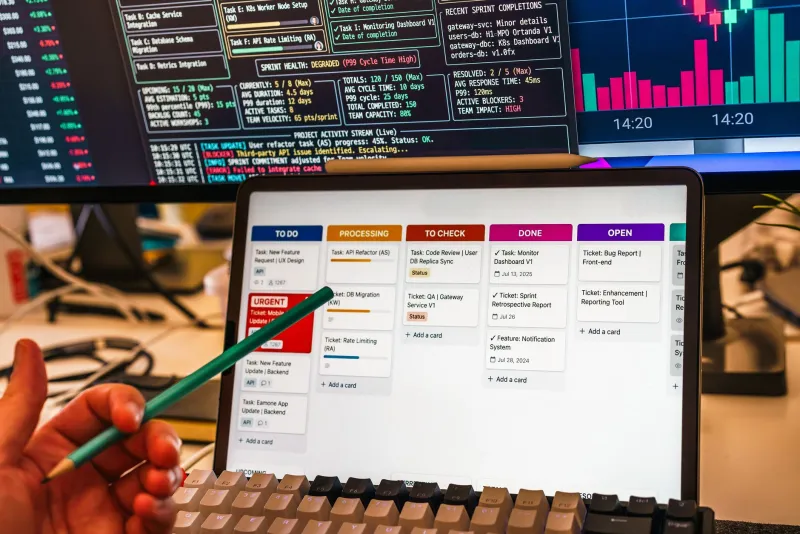
There is a widely held assumption in enterprise engineering: more monitoring equals better visibility. Teams invest in agents, collectors, dashboards, and alerting pipelines, layering instrumentation across every tier of the stack. By conventional logic, this should produce superior incident detection. In practice, the opposite frequently occurs.
Organizations operating the most comprehensively monitored environments often discover critical failures later than peers running leaner observability configurations. The cause is not negligence. It is the structural consequence of treating coverage as a proxy for clarity.
The Mechanics of Signal Degradation
When monitoring scope expands — from core infrastructure to application performance to user experience telemetry to third-party dependency health — the volume of incoming data grows nonlinearly. Each new data source introduces its own alert thresholds, its own baseline fluctuations, and its own category of false positives.
Engineers learn, over time, which alerts can be safely ignored during peak hours, which dashboards reflect known anomalies that have persisted for months without consequence, and which notification channels have become effectively muted through repetition. This learned filtering is not documented anywhere. It lives in institutional memory, and it creates invisible gaps in incident response.
When a genuinely novel failure emerges — one that does not match established noise patterns — it arrives in an environment where the team's cognitive filters are already engaged. The signal competes with hundreds of familiar alerts rather than standing out against a quiet baseline. By the time the anomaly is recognized as meaningful, the incident has already progressed.
Compliance Metrics Versus Predictive Metrics
A meaningful distinction exists between metrics that satisfy audit requirements and metrics that actually predict production failures. These two categories overlap far less than most monitoring strategies assume.
Compliance-oriented metrics tend to be well-defined, stable, and easy to report. Uptime percentages, error rate thresholds, and SLA-aligned response time buckets serve regulatory and contractual purposes effectively. They are, however, lagging indicators. By the time they breach threshold, the failure event is already underway.
Predictive metrics behave differently. They are often noisier in isolation, harder to baseline, and less intuitive to non-technical stakeholders. Subtle shifts in garbage collection pause frequency, gradual increases in connection pool wait time, or minor elongation in inter-service handshake latency can each precede significant failures by meaningful time windows — if they are not buried beneath a thousand other data points demanding equal attention.
The organizations that detect failures earliest tend to maintain a small, deliberately curated set of leading indicators with aggressive alerting, sitting alongside a broader monitoring layer that is consulted during post-incident review rather than during active response.
How Monitoring Sprawl Develops
Monitoring sprawl rarely results from a single architectural decision. It accumulates incrementally. A vendor integration requires its own health checks. A compliance audit demands additional logging. A past incident prompts a new dashboard that never gets retired. A platform team adds default instrumentation to a new service template without auditing what already exists.
Each addition is locally justified. Collectively, they produce an environment where no single engineer has a coherent mental model of what the monitoring system is actually measuring and why. Dashboards multiply faster than they are deprecated. Alert channels absorb new rules without removing obsolete ones.
This pattern is particularly pronounced in organizations that have undergone rapid infrastructure modernization — cloud migrations, microservices decomposition, or platform consolidations — where legacy monitoring configurations persist alongside new tooling rather than being replaced by it.
A Framework for Monitoring Triage
Addressing monitoring sprawl requires a structured reduction process rather than simply adding better tooling on top of existing complexity.
Step one: Classify existing alerts by incident correlation. Pull twelve months of incident records and identify which alert categories appeared in the timeline of confirmed production failures. Alerts with no historical correlation to confirmed incidents are candidates for demotion or removal.
Step two: Measure alert fatigue by channel. Audit acknowledgment rates and time-to-acknowledge across notification channels. Channels with consistent acknowledgment delays exceeding defined SLO windows are exhibiting fatigue patterns. Reduce volume before adding routing logic.
Step three: Separate response dashboards from diagnostic dashboards. Dashboards consulted during active incidents should contain only actionable, real-time signals. Dashboards used for post-incident analysis or capacity planning serve a different purpose and should be maintained separately, not merged into a single view that must serve both functions simultaneously.
Step four: Establish a leading indicator registry. Identify five to ten metrics that have historically preceded failures by detectable time windows. Document their normal ranges, their failure-adjacent behaviors, and their alert thresholds. Treat this registry as a managed asset, reviewed quarterly.
The Organizational Dimension
Monitoring rationalization is not purely a technical exercise. It requires organizational alignment on what the monitoring system is for. When different stakeholders — security, compliance, operations, and engineering — each have additive authority over monitoring configuration but no shared accountability for alert volume, sprawl is structurally guaranteed.
Effective monitoring governance assigns ownership of alert-to-incident correlation quality, not just alert coverage. The question asked in operational reviews should not be "are we monitoring this system" but "does our monitoring of this system improve our detection capability."
Teams that reframe monitoring as a precision instrument rather than a coverage exercise tend to operate with faster detection, lower alert fatigue, and better incident response coherence. The goal is not to see everything. The goal is to see what matters before it becomes a crisis.