Measurement Overconfidence: How Granular Dashboards Are Quietly Degrading Strategic Decision-Making
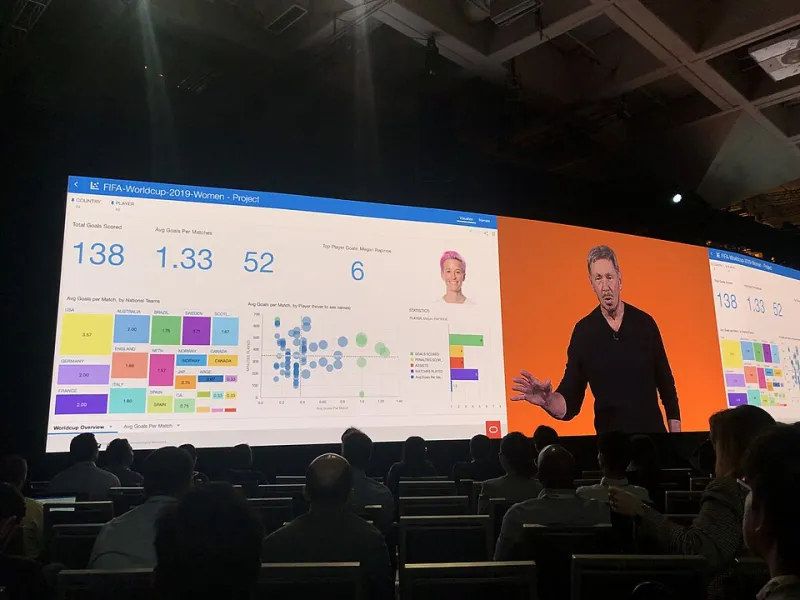
Photo: GeneralAB13, CC BY-SA 4.0, via Wikimedia Commons
There is a particular kind of confidence that emerges in a room full of screens. When every wall displays a live feed of conversion rates, infrastructure latency, and customer satisfaction scores, the atmosphere communicates control. Leaders feel informed. Teams feel accountable. The organization appears, at least to itself, to be operating with scientific precision.
Yet the decisions being made in those rooms are frequently no better — and sometimes demonstrably worse — than decisions made a decade ago with quarterly reports and executive intuition. The dashboard has become the enterprise's most elaborate form of reassurance, and the cost of that reassurance is rarely measured.
The Illusion of Precision
Modern business intelligence platforms can surface thousands of data points in milliseconds. That capability, impressive in engineering terms, creates a cognitive problem that most organizations have not seriously addressed: the human brain does not distinguish well between data that is precise and data that is meaningful. When a metric is displayed to two decimal places on a polished interface, it carries implicit authority regardless of whether the underlying measurement is actually reliable or strategically relevant.
This is what might be called the precision paradox. The more granular a dashboard becomes, the more it signals rigor. But granularity is not the same as accuracy, and accuracy is not the same as relevance. A real-time churn rate updated every ninety seconds is not inherently more useful than a weekly cohort analysis — and in many decision contexts, it is substantially less useful because it introduces noise that masquerades as signal.
Research in behavioral economics has long established that presenting numerical data increases decision confidence independently of whether that data improves decision quality. Dashboards exploit this bias at institutional scale. When every leader in an organization is trained to defer to the metrics feed, the organization collectively outsources judgment to whatever happens to be measurable and well-visualized.
Reactive Optimization as a Strategic Trap
One of the more consequential side effects of dashboard culture is the normalization of reactive decision-making. When metrics are visible in real time, the organizational instinct is to respond in real time. A dip in daily active users triggers an emergency standup. A spike in support ticket volume redirects engineering resources. A single week of declining email open rates prompts a campaign overhaul.
None of these responses are inherently wrong. Some short-cycle adjustments are appropriate and necessary. The problem arises when reactive optimization becomes the dominant mode of organizational behavior, displacing the longer-horizon thinking that actually determines competitive position.
Strategic decisions — which markets to enter, which capabilities to build, which partnerships to prioritize — do not yield to real-time dashboards. They require synthesis across time, across functions, and across qualitative signals that no instrumentation pipeline captures cleanly. When leadership teams spend the majority of their analytical attention on metrics that update by the hour, they are, in effect, training themselves to be excellent at managing the present at the expense of designing the future.
This is not a technology failure. It is an organizational design failure that technology has amplified.
What Gets Measured Gets Managed — and Distorted
The management adage about measurement and behavior remains accurate, but its implications are more troubling than its proponents typically acknowledge. When organizations define performance in terms of specific, trackable metrics, they do not simply observe behavior — they reshape it. Teams optimize for what is counted. Individuals calibrate their efforts toward what appears on the dashboard.
In isolation, this alignment can be productive. In practice, it frequently produces metric gaming, narrow optimization, and the systematic neglect of outcomes that matter but resist quantification. Customer trust, team morale, product coherence, and organizational learning are all strategically significant. None of them render cleanly as a KPI. None of them appear on the standard executive dashboard. And so they are, in the measurement-first enterprise, perpetually undermanaged.
The organizations most susceptible to this distortion are those that have invested most heavily in analytics infrastructure. The more sophisticated the measurement apparatus, the stronger the implicit message that what it captures is what counts.
A Framework for Metric Discipline
The solution is not to dismantle analytics infrastructure or revert to intuition-based management. It is to apply the same rigor to selecting metrics that organizations currently apply to building the systems that collect them.
A practical starting point is to categorize every tracked metric into one of three tiers.
Tier One: Outcome Metrics. These are the measures that directly reflect business health — revenue retention, customer lifetime value, market share movement, and similar indicators. They tend to update slowly, resist gaming, and require context to interpret. They should anchor strategic conversations.
Tier Two: Leading Indicators. These are metrics with a demonstrated, empirically validated relationship to Tier One outcomes. Not assumed relationships — validated ones. If increasing a particular engagement metric has not been shown, through controlled analysis, to improve retention, it does not belong in this tier.
Tier Three: Operational Diagnostics. These are the high-frequency, granular metrics that support day-to-day technical and operational management. They are useful to the teams responsible for system performance and process execution. They are not useful — and are often actively harmful — when elevated into executive decision-making.
Most organizations have this hierarchy inverted. Operational diagnostics dominate the executive dashboard because they are the easiest to instrument and the most visually dynamic. Outcome metrics, which require more sophisticated analysis and longer time horizons, are relegated to quarterly reviews that receive a fraction of the attention.
Rebalancing this hierarchy requires deliberate governance. It means defining, at the leadership level, which metrics are authorized to trigger strategic decisions and which are confined to operational management. It means establishing review cadences that match the natural update frequency of outcome data rather than the technical capability of the instrumentation layer. And it means cultivating tolerance for the ambiguity that genuine strategic thinking requires.
The Discipline of Strategic Restraint
There is a competitive advantage available to organizations willing to exercise measurement discipline — not because less data is inherently better, but because the ability to distinguish consequential signals from high-resolution noise is increasingly rare.
The enterprises that will navigate the next decade of market complexity most effectively will not be the ones with the most sophisticated dashboards. They will be the ones whose leaders understand what their dashboards cannot show them, and who have built the organizational habits to act on that understanding.
Precision, deployed without judgment, is not an asset. It is an elaborate distraction. The goal of measurement is not confidence. It is clarity — and those two things are not the same.